

Visit to Museum of Industrial Olive-Oil Production of Lesvos
On April 30th, the PNOE team visited the Museum of Industrial Olive-Oil Production of Lesvos—a place where history, craftsmanship, and innovation converge. This visit was not simply educational; it was a strategic step in understanding how the foundations of olive oil production can inform a more sustainable and quality-driven future.
A Living Legacy of Olive Oil Production
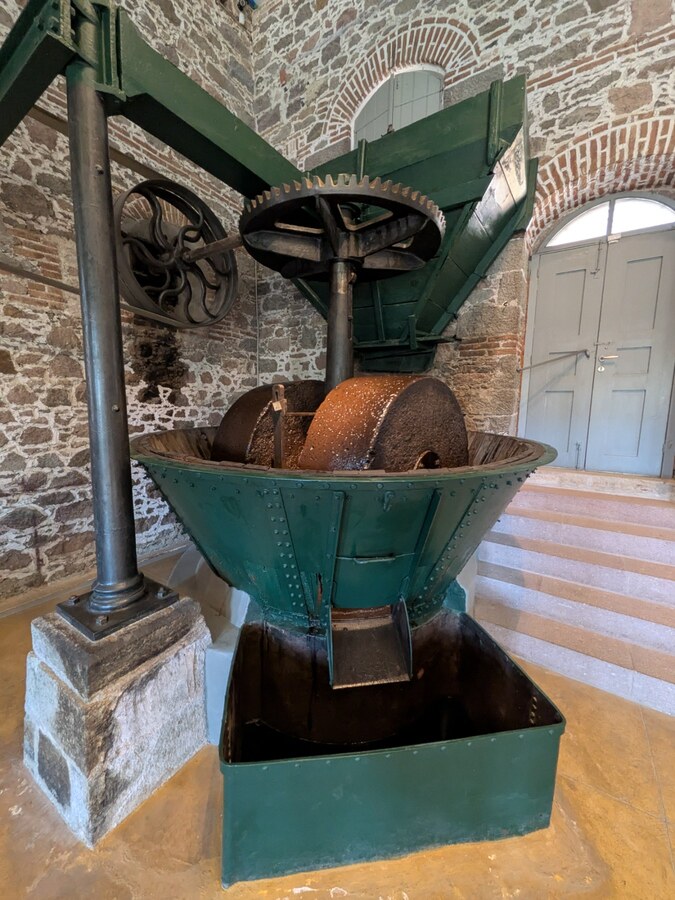
Housed in the restored communal olive press of Aghia Paraskevi, the museum offers a rare opportunity to witness the evolution of olive oil production—from early mechanical systems powered by steam to more advanced diesel-driven operations. Observing these transitions provided valuable insight into how technological adaptation has always been central to efficiency and quality in olive oil production.
For PNOE, this reinforces a core principle: innovation is most powerful when it is rooted in deep understanding of tradition.
Understanding the Full Value Chain
Inside the main building, we explored the essential stages of olive oil production—crushing the olives, pressing the olive pulp, and separating oil from water. These are not just technical steps; they are critical control points that directly influence quality, flavor, and nutritional value.
Equally important was the broader ecosystem presented in the old storage areas:
- Cultivation and care of the olive tree
- Production of by-products such as olive-pomace, kernel oil, and soap
- Marketing and distribution channels, both local and international
- Professions that historically supported the olive oil economy
This holistic view aligns strongly with PNOE’s approach: olive oil is not just a product, but a system—agricultural, economic, and cultural.
The “People’s Machine”: A Model of Collective Value
One of the most striking elements of the visit was the story of the communal olive press, known as the “People’s Machine.” This model of shared ownership was pioneering for its time, shaping not only production efficiency but also the social and economic fabric of the region.
For us, this concept resonates deeply. At PNOE, we believe that value creation in olive oil should extend beyond the product—to communities, partnerships, and long-term relationships. The idea that production can be both efficient and socially embedded is a lesson worth carrying forward.
From Observation to Application
The museum does more than display machinery—it brings processes to life. From the factory whistle calling workers to operation, to interactive demonstrations of oil production and quality testing (such as acidimetry), it emphasizes the importance of precision, discipline, and continuous learning.
These are principles we actively apply:
- Respect for raw material and land
- Focus on quality control at every stage
- Continuous improvement through knowledge and observation
PNOE: Building the Future on Proven Foundations
Our visit to Lesvos reaffirmed that excellence in olive oil is not accidental—it is the result of accumulated knowledge, refined processes, and respect for the ecosystem in which it is produced.
At PNOE, we are committed to taking stable, deliberate steps forward. By learning from the past, we strengthen our ability to deliver high-quality extra virgin olive oil that reflects both heritage and modern standards.
This journey—from traditional presses to contemporary production—is the path we follow: grounded in history, guided by expertise, and focused on creating lasting value.