
Greece’s “Liquid Gold”
From the Sacred Olive Tree to the Scientific Confirmation of Health
Introduction
Few products have been so closely linked to human history, civilization, religious tradition and health as olive oil. From antiquity to the modern era, the olive tree and its precious oil have accompanied the Greek people, constituting not only a fundamental element of the diet but also a symbol of peace, blessing, wisdom and prosperity. Greek olive oil is not merely an agricultural product; it is part of the national identity and cultural heritage of Greece, while at the same time modern science increasingly confirms its beneficial properties for human health.
This article examines this unique treasure from an interdisciplinary perspective: through the lens of linguistics, history, theology and modern medical science, it seeks to highlight why Greek organic extra virgin olive oil remains, five millennia after its first cultivation, one of the most precious goods that the Greek land has offered to the world.
I. Etymology and Historical Journey: The Tree of Light
The word “elaion” (oil) appears already in the oldest texts of the Greek language and is directly connected to the fruit of the olive tree — a tree cultivated in the Greek region for thousands of years. The root elai- traces back to a pre-Greek substratum, probably Aegean or Mediterranean, and from it derive the Latin oleum and the modern oil, huile and olio — linguistic testimony to Greece’s cultural primacy in spreading olive oil throughout the ancient world.
Archaeological findings attest that olive cultivation was known in the Aegean as early as the third millennium BC, while during the Minoan and Mycenaean periods olive oil was an important commercial commodity. Linear B tablets from Knossos record quantities of oil reserved exclusively for religious ceremonies — evidence that the Minoans already regarded it as a sacred substance.
A. Ancient Greece and the “Liquid Gold”
Homer called olive oil “liquid gold” (chryson hygron), recognizing its value not only as a nutritional good but also as a means of purification, beautification and medical aid. The importance of the olive in ancient Greece was multifaceted: it was a basic dietary good, used for lighting, body care, religious worship and medicine.
The athletes of the Olympic Games anointed their bodies with olive oil before competing, while the victors were crowned with the kotinos, a wreath of wild-olive branches. During the Panathenaia, the victors received as a prize amphorae filled with excellent Attic olive oil — a fact that demonstrates its high economic and symbolic value.
Solon (640–558 BC) elevated the olive to an institutional level, enacting laws that prohibited the felling of olive trees. Hippocrates, the father of Medicine, described dozens of therapeutic uses of olive oil — remarkably consistent with modern clinical documentation. Theophrastus, the founder of the science of Botany, devoted a significant part of his work to the study of the olive and the particularities of its cultivation.
B. Divine Origin: Athena and the Myth
In Greek mythology, the olive holds a special place. According to the well-known myth, the goddess Athena offered the inhabitants of Attica the first olive tree during her dispute with Poseidon over dominion of the city. The Athenians considered the goddess’s gift more precious than the seawater offered by Poseidon: food, light and medicine — over power without life. The sacred olive stood within the Acropolis, and Herodotus (Histories VIII, 55) reports that, though burned by the Persians, it sprouted anew within a single day — a miracle that renewed the hope of the Athenians.
II. The Olive in Holy Scripture: A Symbol of Blessing and Peace
In the Judeo-Christian tradition, the olive holds a primary place. From the olive branch brought by the dove to Noah as a symbol of reconciliation between God and humanity (Genesis 8:11), to the Mount of Olives where the Lord prayed before His Passion, this tree is inextricably linked with Divine Grace.
A. Old Testament
In Deuteronomy (8:8) the Promised Land is described as “a land of olive oil and honey,” placing olive oil among the seven sacred fruits of Israel. In the book of Judges (9:8–9) the parable of the trees offers the olive the kingship — which it declines, choosing service instead. In the Psalms, the olive is presented as an image of blessing and family prosperity: “like a fruitful olive tree in the house of God” (Psalm 51).
Oil was widely used for the anointing of kings, priests and prophets — an act that made it a bearer of divine commission. The very title “Messiah” (Christos in Greek) means “the one anointed with oil,” revealing how deeply this substance enters into Christology itself.
B. New Testament
The Garden of Gethsemane — from the Hebrew Gat Shmanim, “olive press” — is the place where Christ prayed before His arrest (Matthew 26:36). The parable of the ten virgins (Matthew 25:1–13) uses oil as a symbol of spiritual vigilance and readiness.
The Apostle Paul, in the Epistle to the Romans (11:17–24), uses the image of the cultivated olive tree and the grafting of branches to explain the relationship between Israel and the Church — one of the deepest theological metaphors of the New Testament. Finally, the Epistle of James (5:14–15) explicitly establishes the theology of oil: “let him call for the elders of the church, and let them pray over him, anointing him with oil in the name of the Lord.”
III. Why Greek Olive Oil Is Superior
Greek olive oil excels in qualitative characteristics and polyphenol content — a fact that makes it globally recognized as one of the finest, without, however, dominating in production volume.
A. Climate and Thermal Stress
The abundant sunshine and the hot, dry conditions of the Greek summer subject the trees to “thermal stress” — a natural defense mechanism that significantly increases the concentration of polyphenols in the fruit. For the tree, polyphenols serve as a “sunscreen” and “immune” system; for the consumer, they become the most valuable bioactive component of olive oil.
Organic olive oil may further enhance this advantage: some studies show that the absence of synthetic pesticides and fertilizers drives the tree toward a more intense defensive metabolism, often resulting in higher levels of phenolic compounds.
B. Soil Science and Microclimate
Greek soil, often rocky and sloping, forces the olive tree’s root system to seek nutrients at depth, producing fruit with an excellent organoleptic profile. At the same time, the sea breeze in island and coastal regions decisively shapes the aromatic profile, lending Greek olive oil a unique balance between bitter and pungent — both reliable indicators of high polyphenolic content.
C. The Koroneiki Variety
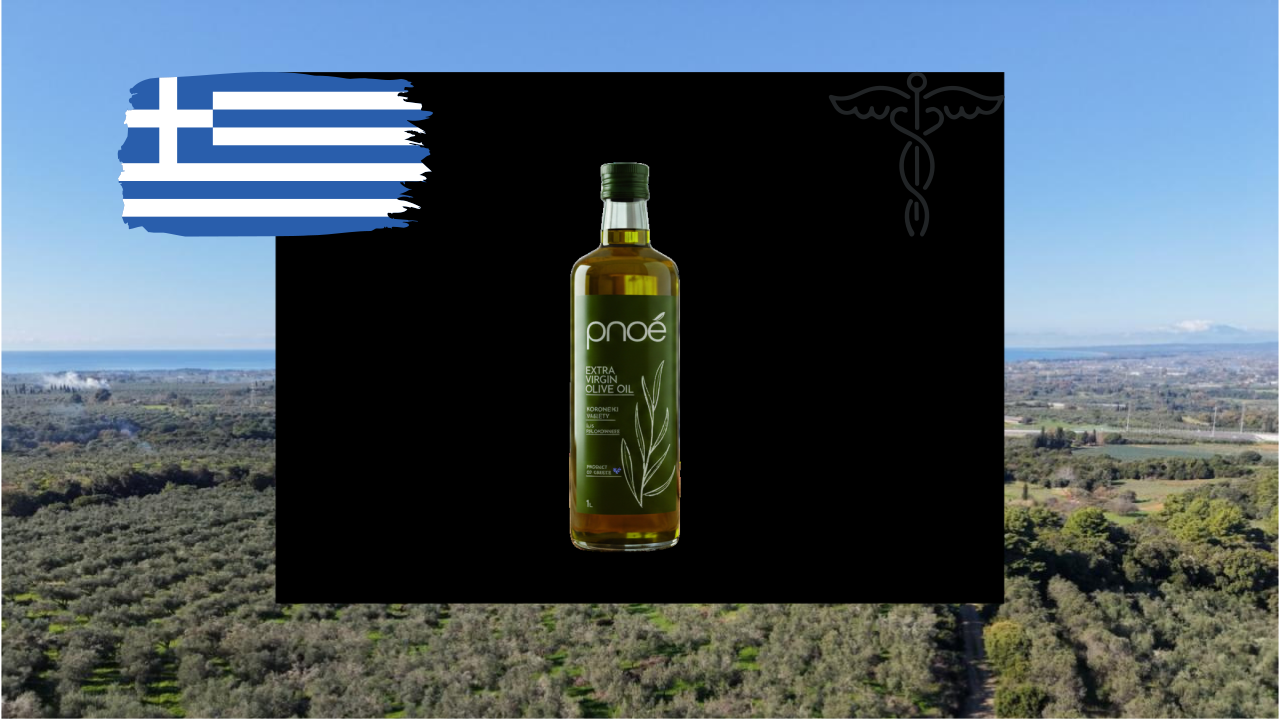
The indigenous Koroneiki variety (Olea europaea var. koroneiki), dominant in Crete and the Peloponnese, produces olive oil with an exceptionally high polyphenolic content and resistance to oxidation. A qNMR study of samples of Greek olive oils (Diamantakos et al. 2021) showed a polyphenol range of 20–1,530 mg/kg, with the organic Koroneiki samples consistently in the upper quartile of the sample examined. Moreover, a comparative study of the polyphenolic composition of Greek EVOO samples of different origins (Kouka et al., 2019) confirmed a strong positive correlation between the polyphenolic profile and antioxidant capacity — a finding that highlights the diversity of Greek olive groves as a nutritional advantage.
IV. Composition and Therapeutic Properties: A Functional Food
From a medical standpoint, it should be emphasized that extra virgin olive oil (EVOO) is not merely a fat — it is a functional food with documented clinical actions.
A. Biochemical Composition
Approximately 70–80% of the fatty acids in EVOO consist of monounsaturated fats, predominantly oleic acid (omega-9), which is associated with an improved lipid profile. The real strength of EVOO, however, lies in its bioactive fraction:
— Polyphenols: oleocanthal, oleacein, oleuropein, hydroxytyrosol, tyrosol
— Tocopherols (vitamin E) and carotenoids
— Squalene and phytosterols (β-sitosterol)
— Chlorophyll
B. Cardiovascular Protection — The PREDIMED Study
The PREDIMED study (Prevención con Dieta Mediterránea), the largest randomized clinical trial on the Mediterranean Diet, followed 7,447 individuals at high cardiovascular risk. The results (Estruch et al. 2013) showed that the Mediterranean diet enriched with more than 4 tablespoons of EVOO per day reduced the risk of cardiovascular events by 30% compared with a control group. In a related analysis, the risk of type 2 diabetes mellitus was 40% lower in the EVOO group.
The mechanistic findings include: improvement of the lipid profile, reduced LDL oxidation, antithrombotic action and reduction of inflammatory markers. A systematic review and meta-analysis (Schwingshackl et al., 2015) confirmed the beneficial effect of EVOO on inflammatory markers (CRP, IL-6) and endothelial function. Covas (2007) documented in detail the mechanisms of cardioprotective action, demonstrating that hydroxytyrosol and oleuropein protect LDL lipoprotein molecules from oxidation, delaying the atherosclerotic process.
C. Oleocanthal: The Natural Anti-inflammatory
In 2005, Gary Beauchamp and colleagues published in Nature a landmark discovery: oleocanthal, the phenolic compound responsible for the characteristic “burning” sensation in the throat when consuming quality olive oil, inhibits the COX-1 and COX-2 enzymes in a manner identical to that of ibuprofen. Consuming 50 ml of EVOO per day corresponds to an anti-inflammatory action roughly equal to 10% of a standard adult dose of ibuprofen — modest, but continuous and without gastrointestinal side effects.
This discovery has broader implications: chronic low-grade inflammation is a common pathophysiological basis of cardiovascular diseases, neurodegenerative conditions and colorectal cancer. Gaforio and colleagues (2019), in the consensus report of the III International Conference on Virgin Olive Oil and Health, summarized the evidence for the broad anti-inflammatory and anticancer action of phenolic compounds.
D. Gastroenterology: Microbiome, Liver and the Intestinal Axis
From a gastroenterological perspective, EVOO is now a functional dietary factor with significant effects on the gut–liver–microbiome axis. Its polyphenols appear to favor the growth of beneficial bacteria (Lactobacillus, Bifidobacterium), contribute to the production of short-chain fatty acids (SCFA) — which strengthen the intestinal barrier — and enhance the integrity of the mucosa. These constitute prebiotic properties with direct consequences for the proper functioning of the immune system.
At the same time, studies show that the regular consumption of EVOO improves insulin sensitivity, reduces markers of chronic inflammation and contributes to the prevention or management of Metabolic Dysfunction-Associated Steatotic Liver Disease (MASLD — the newer name for NAFLD). The biological mechanisms include inhibition of hepatic lipogenesis, reduction of oxidative stress and regulation of inflammatory signaling pathways in the hepatic parenchyma (Servili et al. 2014).
Of particular interest is the action of EVOO against Helicobacter pylori (H. pylori), the pathogen responsible for gastritis, peptic ulcer and increased risk of gastric cancer. An in vitro study (Romero et al., 2007) demonstrated that the phenolic constituents of EVOO — particularly the dialdehydic form of ligstroside — exhibit bactericidal action at concentrations as low as 1.3 μg/ml. At a clinical level, a pilot study with 60 H. pylori-positive patients (Castro et al., 2012) reported eradication rates of 27–40% with daily consumption of 30 g of virgin olive oil over 14 days. A recent study in animal models (Sosa et al., 2022) confirmed inhibition of the pathogen’s growth and a reduction of gastric mucosal lesions. The data suggest a complementary role for EVOO in the prevention of gastric disease, with a need for larger randomized trials.
In the field of inflammatory bowel disease (IBD), a growing body of evidence is emerging in favor of EVOO. A randomized clinical cross-over trial in 40 patients with ulcerative colitis (Morvaridi et al., 2020) showed a statistically significant reduction in ESR and high-sensitivity CRP, as well as a remission of symptoms (bloating, fecal urgency, incomplete evacuation) after consuming EVOO compared with canola oil. A review of randomized clinical trials (Vrdoljak et al., 2022) summarized the mechanisms: the phenolic constituents regulate the T-cell immune response, reduce the secretion of TNF-α and IL-6 in the mucosa, and inhibit the NF-κB pathway — a central regulator of intestinal inflammation. The findings position EVOO as a promising dietary factor for the complementary management of Crohn’s disease and ulcerative colitis.
E. Neuroprotection
Emerging scientific data support the role of EVOO in the prevention of neurodegenerative diseases. A study in animal models of Alzheimer’s disease (Lauretti et al. 2017) demonstrated that oleocanthal promotes the autophagic clearance of the β-amyloid protein. In humans, the randomized PREDIMED-NAVARRA study (Martínez-Lapiscina et al. 2013) associates high consumption of EVOO with better cognitive function in the elderly.
F. Strokes, Autoimmune Conditions and Systemic Inflammation
Beyond the cardiovascular system, the data on strokes are particularly strong: the initial PREDIMED analysis (Estruch et al., 2013) recorded a 39% reduction in strokes in the EVOO group, while a systematic review of polyphenols and stroke prevention (Tressera-Rimbau et al., 2017) documented vasoprotective mechanisms through improved endothelial function, antithrombotic action and reduced arterial stiffness. In the field of autoimmune diseases, experimental studies in models of autoimmune encephalomyelitis (EAE — an animal model of multiple sclerosis) showed that olive polyphenols reduce the severity of the disease through regulation of SIRT1 and inhibition of oxidative stress (Giacometti et al., 2020). Epidemiological data also associate regular consumption of EVOO with lower rates of rheumatoid arthritis in Mediterranean populations — a finding attributed to the systematic suppression of inflammatory cytokines (TNF-α, IL-1β, IL-6).
V. Olive Oil in the Worship of the Orthodox Church
Beyond its nutritional and medical value, olive oil holds a prominent place in the liturgical life of the Orthodox Church. From the first Christian centuries to the present day, oil is regarded as a sign of blessing and sanctification, bringing the biblical and pre-Christian heritage into direct continuity.
A. The Holy Unction (Euchelaion)
The Euchelaion (prayer + oil) is one of the seven Sacraments of the Orthodox Church. It is traditionally celebrated in its full form by seven priests (the conciliar form), but it may also be celebrated by a single priest (priestly unction), particularly in urgent circumstances. The Church teaches that through the Euchelaion healing of soul and body and the forgiveness of sins are granted — reflecting the holistic conception of the human being as a psychosomatic unity. Here oil is not merely a symbol: it is the “sign” of Christian love that enters the body in order to heal the human being in their entirety.
B. Baptism and Chrismation
During Baptism, the catechumen is anointed with sanctified olive oil (the oil of the catechumens) before immersion — symbolizing victory over the evil one and preparation for life in Christ. After Baptism follows Chrismation with Holy Myron, which is prepared from olive oil and a multitude of aromatic ingredients (balsams, frankincense, essential oils) and is consecrated by the Ecumenical Patriarch.
C. Light and Liturgical Symbol
Olive oil has perennially fueled the lamps (kandelia) of churches and Orthodox homes, symbolizing the unquenchable light of faith and of God’s presence in the lives of people. Saint Cyril of Jerusalem (Mystagogical Catecheses III, 4th c.) interprets oil as a symbol of God’s mercy and of participation in the divine nature — an interpretation that retains its spiritual validity unaltered to our own day.
Epilogue
Greek organic extra virgin olive oil is perhaps the most characteristic expression of a unique continuity among nature, history, civilization, faith and science. It is not only a product of high gastronomic value; it is the fruit of a sacred collaboration between humanity and nature, a gift that science now affirms as a therapeutic tool.
Its consumption is at once an act of respect toward a five-millennia-old tradition and an act of conscious care for the body — which the Christian tradition calls the “temple of the Holy Spirit” (1 Corinthians 6:19–20). In an era in which authenticity, quality and sustainability are gaining ever greater importance, Greek extra virgin olive oil continues to be an invaluable treasure — and a precious offering of Greece to the entire world.
Assistant Professor, Faculty of Medicine, University of Zurich
Specialist Gastroenterologist, Specialist in Internal Medicine
PhD, University of Bern and Aristotle University of Thessaloniki (AUTh)
Graduate in Veterinary Medicine, AUTh
Graduate in Social Theology and Christian Culture, AUTh
Bibliography
1. Beauchamp GK, Keast RSJ, Morel D, et al. Phytochemistry: Ibuprofen-like activity in extra-virgin olive oil. Nature. 2005;437:45–46. DOI: 10.1038/437045a
2. Estruch R, Ros E, Salas-Salvadó J, et al. Primary Prevention of Cardiovascular Disease with a Mediterranean Diet. New England Journal of Medicine. 2013;368:1279–1290. DOI: 10.1056/NEJMoa1200303
3. Salas-Salvadó J, et al. Prevention of Diabetes with Mediterranean Diets. Annals of Internal Medicine. 2014;160(1):1–10.
4. Schwingshackl L, Christoph M, Hoffmann G. Effects of olive oil on markers of inflammation and endothelial function — a systematic review and meta-analysis. Nutrients. 2015;7(9):7651–7675. DOI: 10.3390/nu7095356
5. Covas MI. Olive oil and the cardiovascular system. Pharmacological Research. 2007;55(3):175–186. DOI: 10.1016/j.phrs.2007.01.010
6. Servili M, Sordini B, Esposto S, et al. Biological activities of phenolic compounds of extra virgin olive oil. Antioxidants. 2014;3(1):1–23. DOI: 10.3390/antiox3010001
7. Gaforio JJ, Visioli F, Alarcón-de-la-Lastra C, et al. Virgin Olive Oil and Health: Summary of the III International Conference on Virgin Olive Oil and Health Consensus Report. Nutrients. 2019;11(9):2039. DOI: 10.3390/nu11092039
8. Diamantakos P, Ioannidis K, Papanikolaou C, et al. A New Definition of the Term “High-Phenolic Olive Oil” Based on Large Scale Statistical Data of Greek Olive Oils Analyzed by qNMR. Molecules. 2021;26(4):1115. DOI: 10.3390/molecules26041115. PMC7923275.
9. Lauretti E, et al. Extra-virgin olive oil ameliorates cognition and neuropathology of the 3xTg mice: role of autophagy. Annals of Clinical and Translational Neurology. 2017;4(8):564–574. DOI: 10.1002/acn3.431
10. Martínez-Lapiscina EH, et al. Virgin olive oil supplementation and long-term cognition: the PREDIMED-NAVARRA randomized trial. Journal of Nutrition Health & Aging. 2013;17(6):544–552.
11. Kouka P, et al. The Polyphenolic Composition of Extracts Derived from Different Greek Extra Virgin Olive Oils Is Correlated with Their Antioxidant Potency. Oxid Med Cell Longev. 2019;2019:1870965. PMC6446106.
12. Cyril of Jerusalem. Mystagogical Catecheses III (On Chrismation). 4th c. AD.
13. Herodotus. Histories VIII, 55 (on the sacred olive of the Acropolis).
14. Romero C, Medina E, Vargas J, et al. In vitro activity of olive oil polyphenols against Helicobacter pylori. Journal of Agricultural and Food Chemistry. 2007;55(3):680–686. DOI: 10.1021/jf0630217
15. Castro M, et al. Assessment of Helicobacter pylori Eradication by Virgin Olive Oil. Helicobacter. 2012;17(4):305–308. DOI: 10.1111/j.1523-5378.2012.00949.x
16. Sosa P, et al. Extra virgin olive oil inhibits Helicobacter pylori growth in vitro and the development of mice gastric mucosa lesions in vivo. Frontiers in Microbiology. 2022;13:961597. PMC9389160.
17. Morvaridi M, Jafarirad S, Seyedian SS, et al. The effects of extra virgin olive oil and canola oil on inflammatory markers and gastrointestinal symptoms in patients with ulcerative colitis. European Journal of Clinical Nutrition. 2020;74(6):891–899. DOI: 10.1038/s41430-019-0549-z
18. Vrdoljak J, Kumric M, Vilovic M, et al. Effects of Olive Oil and Its Components on Intestinal Inflammation and Inflammatory Bowel Disease. Nutrients. 2022;14(4):757. DOI: 10.3390/nu14040757
19. Tressera-Rimbau A, Arranz S, Eder M, Vallverdú-Queralt A. Dietary Polyphenols in the Prevention of Stroke. Oxid Med Cell Longev. 2017;2017:7467962. PMC5674514.
20. Giacometti J, Grubić-Kezele T. Olive Leaf Polyphenols Attenuate the Clinical Course of Experimental Autoimmune Encephalomyelitis and Provide Neuroprotection by Reducing Oxidative Stress, Regulating Microglia and SIRT1, and Preserving Myelin Integrity. Oxid Med Cell Longev. 2020;2020:6125638. PMC7415106.
